The Ranchers Update 0.8.10.858: Massive Animal Care Rebalance and Co-op Fixes
Patch 0.8.10.858 for The Ranchers overhauls animal sickness timers, fixes the disappearing livestock bug, and improves multiplayer connection stability.
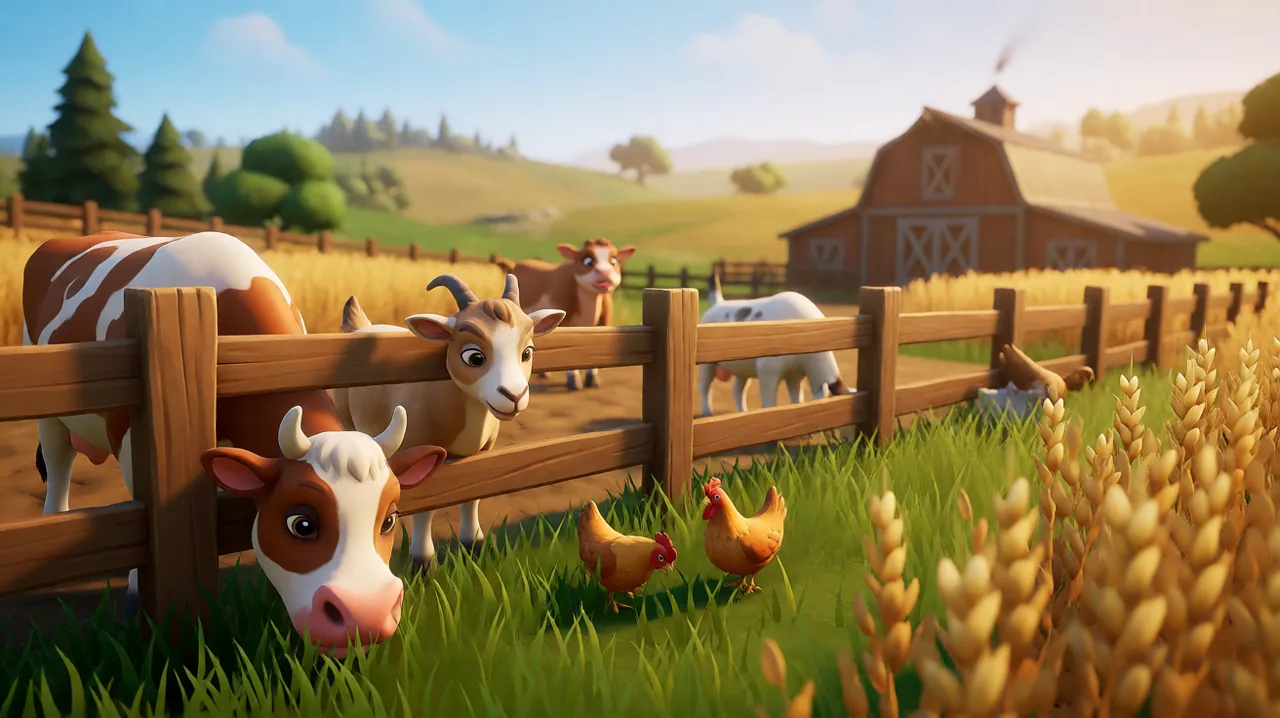
RedPilz Studio has deployed update 0.8.10.858 for The Ranchers, bringing one of the most highly anticipated balancing passes to the game’s agricultural economy since its Early Access launch on PC, macOS, and Linux. This patch addresses core frustrations regarding animal care and ranching, significantly extending the time players have to cure sick livestock. It also targets critical multiplayer stability issues and crushes a notorious bug that was causing farm animals to vanish without a trace.
If you have been holding off on expanding your pastures or investing in expensive cattle due to the high mortality rates and entity bugs, this update changes the math entirely. Here is a complete breakdown of what Update 0.8.10.858 means for your daily routine in The Ranchers.
The End of the Disappearing Livestock Bug
Entity persistence in a massive, seamless open world is notoriously difficult to manage during Early Access development. Over the past few weeks, the community has repeatedly reported a terrifying issue: players would invest their hard-earned money into purchasing cows, goats, or chickens, only to return to their farm the next morning to find the animals completely gone. They had not died of sickness; they had simply ceased to exist in the game’s save data.
According to the patch notes, RedPilz Studio has implemented a major stability pass to the underlying ranching systems, addressing all currently known edge cases that caused animals to despawn or fail to load. The developer specifically thanked community members alfafreakgaming and jennoula for their extensive help in battle-testing these systems and replicating the obscure triggers for the bug.
This fix restores economic confidence. Players can now safely scale up their operations, build larger barns, and invest heavily in animal breeding without the looming threat of the game engine deleting their most valuable assets overnight.
A Complete Rebalance of Animal Sickness and Mortality
The most impactful change in patch 0.8.10.858 is the massive overhaul to animal sickness timers. Previously, the mortality mechanics in The Ranchers were incredibly punishing. If an animal caught a disease, the window to diagnose it, purchase or craft the correct medicine, and administer it was remarkably narrow.
This short window created a direct conflict with the game’s open world exploration mechanics. If a cow died within three in-game days of getting sick, players were essentially tethered to their properties. You could not take a three-day expedition on your yacht to explore a distant island, nor could you commit to a deep, multi-day descent into the combat mines. The financial risk of leaving your farm unattended was simply too high.
Update 0.8.10.858 fundamentally changes this dynamic by making animal care vastly more forgiving, specifically catering to newer players and those who want to experience everything the game has to offer beyond the property line. The new sickness durations before death are as follows:
- Cows: Now remain sick for 7 days (increased from 3 days).
- Goats: Now remain sick for 8 days (increased from 3 days).
- Rabbits: Now remain sick for 5 days (increased from 3 days).
- Chickens: Now remain sick for 4 days (increased from 2 days).
The Strategic Impact on Gameplay
These extended timers represent a massive shift in how you schedule your in-game weeks. A seven-day window for a sick cow means you can embark on a four-day off-grid adventure, return to your farm, discover your cattle are ill, and still have a comfortable three-day buffer to secure medicine.
It also changes the early-game economy. Losing a chicken early on is an annoyance, but losing a cow—which requires a significant upfront capital investment and time to mature before producing milk—can ruin an entire season of financial planning. By stretching the goat and cow mortality timers to over a week, RedPilz Studio is ensuring that total catastrophic loss only happens through extreme player negligence, rather than simply bad timing or a desire to engage with the game’s combat and exploration systems.
New UI Warnings: The End of Day Screen
To complement the extended sickness timers, the developers have introduced a vital Quality of Life (QoL) improvement to the game’s user interface. Prior to this patch, noticing a sick animal required physical proximity and observation during your daily farm chores. If you had a sprawling property with multiple scattered pastures, it was easy to miss a sick rabbit hiding behind a trough.
Now, whenever one of your animals contracts an illness, you will receive a prominent alert directly on the End of Day screen. Because every player must view this summary screen when they go to sleep (which typically displays your daily shipping bin profits and skill progression), it is now practically impossible to miss a sickness notification.
This effectively guarantees that you will always know precisely when the mortality countdown begins, allowing you to prioritize a trip to the veterinarian or the crafting table first thing the following morning.
The Weird Case of NPC Animal Deaths
Patch 0.8.10.858 also addresses a rather confusing bug regarding the world’s non-playable characters. Some players were inexplicably receiving frantic death alerts for animals they did not even own.
Because The Ranchers simulates the routines of its villagers, many NPCs technically “own” livestock on their respective properties around the map. A bug in the notification system was broadcasting the death of these NPC animals to the player’s UI. This has now been corrected, ensuring that any death alert you receive moving forward strictly pertains to the animals registered to your own farm.
Stabilizing the Co-op Multiplayer Experience
Given that The Ranchers supports 1-4 player online co-op, network stability is just as important as farming mechanics. Playing with friends globally can introduce latency, and in previous versions of the Early Access build, the host-client connection was incredibly strict.
If a client player experienced a brief spike in packet loss or a momentary internet hiccup, the game’s netcode would aggressively time them out, disconnecting them from the host’s server. This was highly disruptive during synchronized activities like harvesting massive fields, clearing out dungeons, or trading at the auction house.
Update 0.8.10.858 adjusts the multiplayer connection timeouts. The game will now tolerate brief internet connection drops, pausing or attempting to catch the client up rather than immediately severing the connection. While players with fundamentally broken internet connections will still experience issues, this change will drastically reduce the frequency of random disconnects for players experiencing normal, minor network fluctuations. For more details on setting up smooth sessions with friends, check our co-op multiplayer guide.
What to Expect Next
While the title of the official Steam announcement mentions a “Building Update,” the detailed text regarding construction changes was truncated in the primary feed. However, community reports and the nature of the patch suggest that alongside these ranching fixes, RedPilz Studio has implemented backend stability for the building and base construction systems. This reportedly involves ensuring that machines, wind turbines, and custom house layouts save accurately and synchronize properly for all players in a multiplayer session.
Update 0.8.10.858 proves that the developers are heavily prioritizing foundational stability and QoL over rushing out new content. By making the farm less punishing to leave, The Ranchers is finally allowing its players to truly experience the “open world” part of its open-world farming simulation. Ensure your Steam client has downloaded version 0.8.10.858 before launching your next session to take advantage of these vital safety nets for your livestock.